
Failure Detection Detect Problems Before They Become Failure
ChronX continuously monitors live operational data and compares it with learned behavior to detect anomalies, predict failures, and generate alerts and operational insights in real time.
OVERVIEW

From Behavior Monitoring to Failure Prevention
After learning normal equipment behavior, ChronX continuously compares live operational data with learned patterns to detect abnormal behavior.
When deviations from normal behavior are identified, the system detects anomalies, instability patterns, and early warning signs of failure.
This allows organizations to detect problems early and take preventive action before failures occur.
REAL-TIME MONITORING
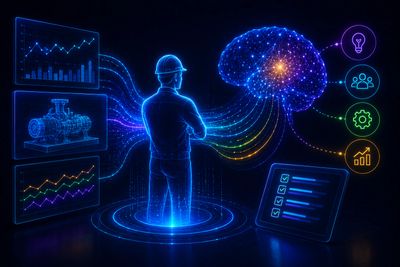
Real-Time Operational Monitoring
ChronX continuously monitors live industrial data streams from sensors, PLCs, SCADA systems, and other data sources.
Live data is compared with learned behavioral models to identify deviations in real time.
Real-time monitoring ensures that anomalies are detected immediately as they occur.
ANOMALY DETECTION MECHANISM
ANOMALY DETECTION MECHANISM
ChronX detects anomalies by comparing live data with expected behavior derived from behavioral models.
An anomaly is identified when the system behavior deviates from learned patterns.
Detection mechanisms include:
• Deviation from expected values
• Deviation from expected signal relationships
• Deviation from expected patterns
• Abnormal changes in behavior
• Unexpected signal combinations
TYPES OF ANOMALIES DETECTED
Point anomalies
Contextual anomalies
Contextual anomalies

Sudden spikes or drops in signals
Contextual anomalies
Contextual anomalies
Contextual anomalies
Abnormal behavior under specific conditions
Collective anomalies
Contextual anomalies
Collective anomalies
Abnormal patterns across multiple signals
Pattern anomalies
Relationship anomalies
Collective anomalies
Deviation from learned patterns
Relationship anomalies
Relationship anomalies
Relationship anomalies
Abnormal relationships between signals
Detecting Gradual Degradation

Many equipment failures occur due to gradual degradation over time rather than sudden failures.
ChronX detects slow performance changes, efficiency loss, and stability reduction that indicate developing problems.
Gradual degradation detection includes:
• Performance drift
• Efficiency loss
• Increasing vibration trends
• Temperature rise patterns
• Pressure instability
• Reduced system stability
Instability Detection
Equipment instability often appears as fluctuations, oscillations, or irregular signal patterns.
ChronX detects instability by analyzing:
• Signal fluctuations
• Oscillation patterns
• Variability changes
• Repeating abnormal patterns
• Unstable operating conditions
Instability detection helps identify issues before major failures occur.
Failure Prediction

ChronX uses anomaly trends, degradation patterns, and instability indicators to predict potential equipment failures.
Failure prediction models analyze:
• Anomaly frequency
• Deviation severity
• Pattern changes
• Degradation trends
• Instability indicators
• Equipment health indicators
These models estimate the likelihood of failure before it occurs.
Risk Scoring
ChronX assigns risk scores based on anomaly severity, frequency, and behavior deviation.
Risk scoring helps prioritize issues and identify critical equipment.
Risk levels may include:
• Low risk – minor deviations
• Medium risk – developing issues
• High risk – critical failure risk
